
Need to know?
What should authors share of themselves

Welcome to the free newsletter of David (D. V.) Bishop, author of the Cesare Aldo historical thrillers set in Renaissance Italy. This time: just what is TMI…
What matters most?
I was purging the backlog of screenshots on my smartphone, trying (and failing) to create enough space for the latest operating system update. While doing so I came across the following social media post on Threads by American writer Kristen Zimmer, and realised it was a good prompt for a newsletter topic:
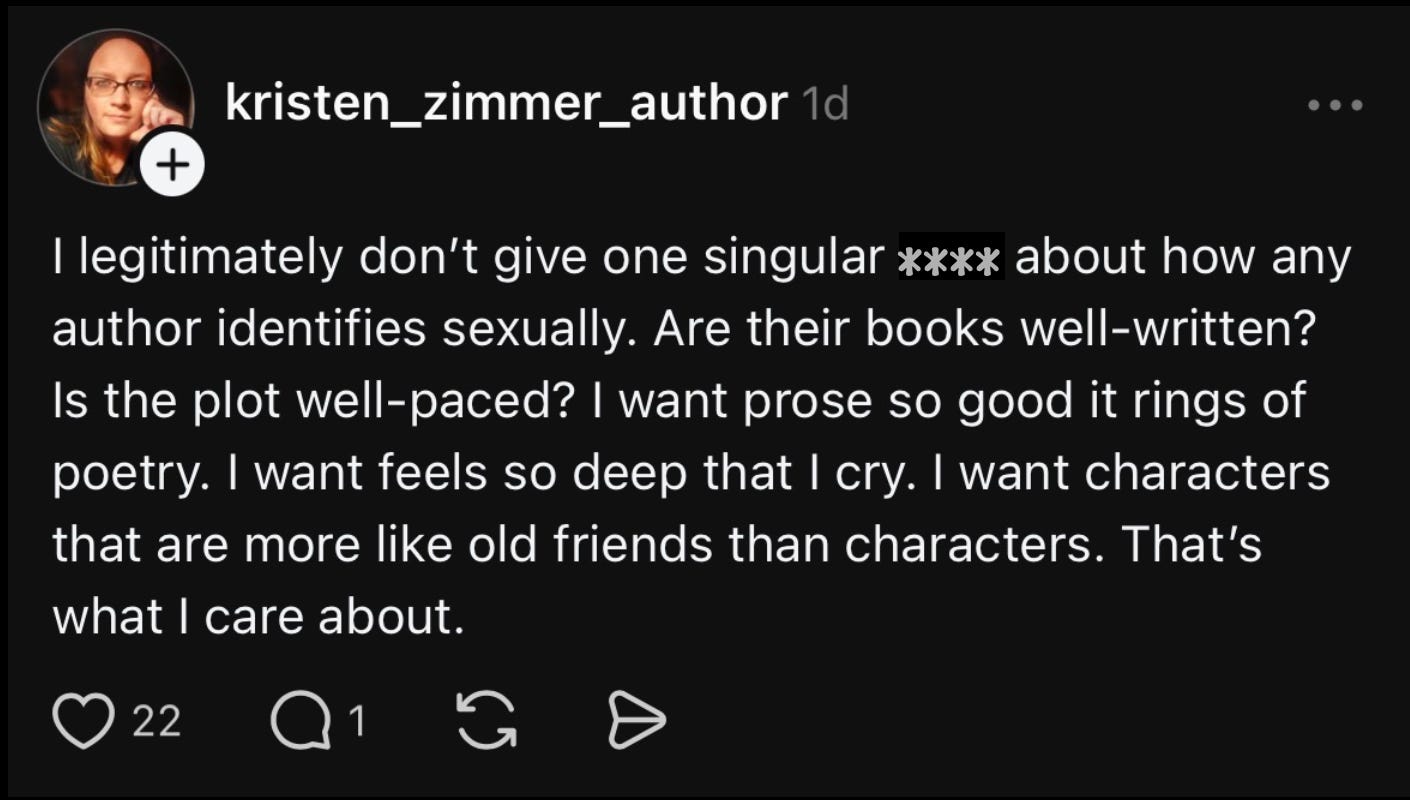
Yes, I did redact a swear word in the first line – apologies to Kristen Zimmer
The post replied to a comment I can’t now find, but if memory serves it concerned whether an author needed to be of a particular sexuality to write that sexuality well in their fiction. There are frequent online debates about who gets to write what and whether writing outside your own lived experience is inherently problematic.
Zimmer gives a crystal clear response to these debates: the specificity of a writer’s sexuality is of no interest. To Zimmer, what matters foremost are the qualities found within the prose such as the empathy a story evokes, the depth of characterisation, and the pacing of its plot (amongst other aspects). That seems fair to me.
Sexuality is not the only hot topic in such online debates. Almost any distinctive characteristic not shared by everybody can become a subject for these discussions. Most of those presenting an argument are doing so from a place of heartfelt, genuine concern or belief - however some are just generating rage-bait for the clicks.
I write a historical thriller series with plenty of elements beyond my lived experience. I’ve never shot, stabbed, poisoned or garrotted anyone to the best of my knowledge. Despite three years of Duolingo, I still can’t speak Italian. And I will never live in Renaissance Italy, unless someone loans me their flux capacitor and a DeLorean.
Books and revelations
That said, my series protagonist Cesare Aldo is a gay man in modern parlance, even if that particular term didn’t exist in 1540. (I’ve written a whole essay about Renaissance Florentine attitudes to sexuality and the practice of sodomy for my Creative Writing PhD, so I can pontificate about this at length, if asked!)
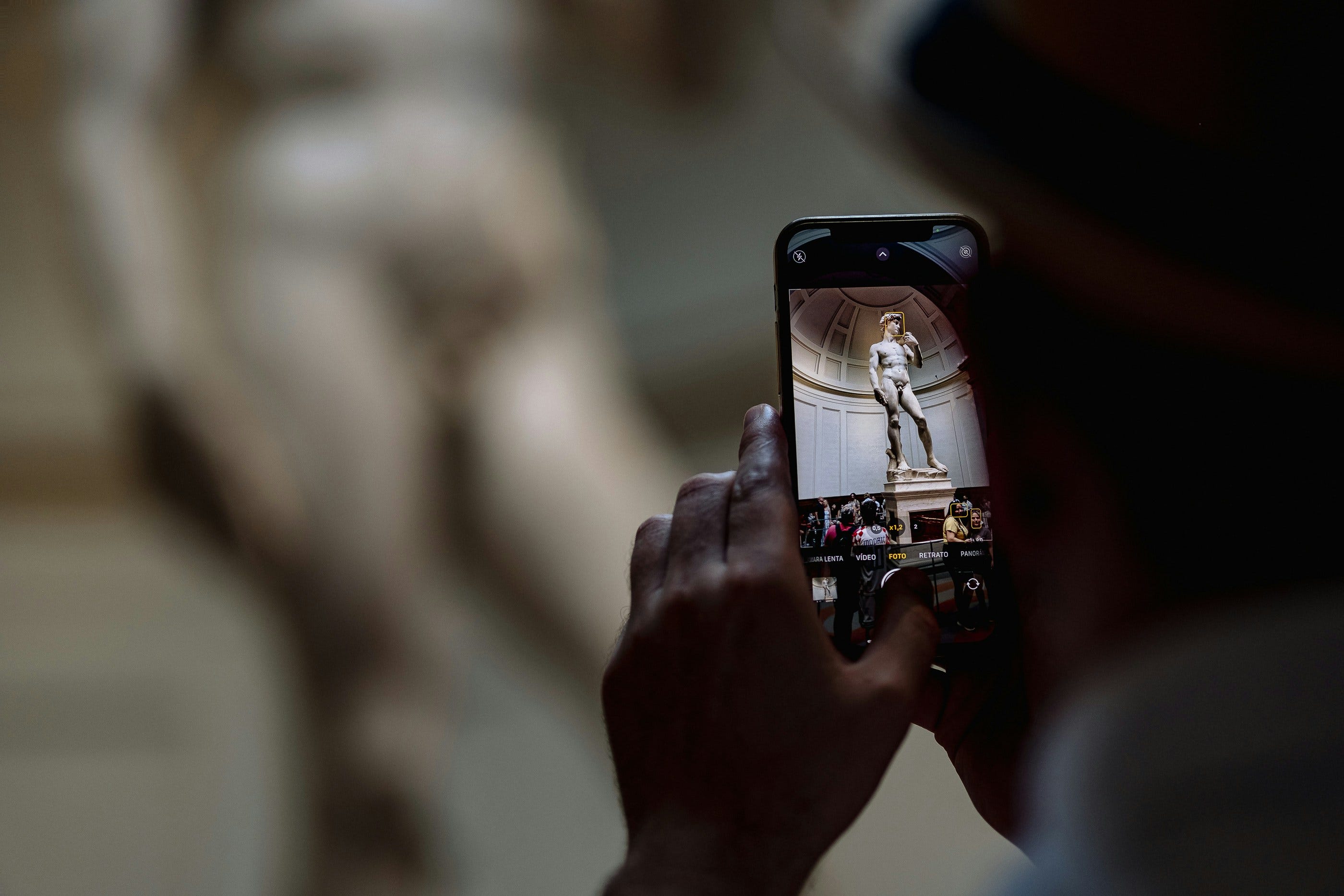
How naked does an author need to be online? • Photo by Giu Vicente on Unsplash
Does the fact that I’m writing a gay protagonist oblige me to announce my own sexual preference(s)? No, I am not convinced it does. If I was writing a straight male sleuth, would anyone expect me to reveal whether or not I was straight? Almost certainly not. The way I see it, what I owe to my readers is the best possible story I can write.
I know authors who’ve felt pressured into announcing or revealing their sexuality before they were ready to do so because of insistent, persistent questions about this online due to the kind of story they’d written. (Perhaps this is not the case so much now, but it seemed to be a particular issue for authors of some young adult fiction.)
Where authors are writing characters or situations beyond their lived experience, I do believe thoughtful research into that experience is needed. If an author is uncertain whether they’d depicted that element of the narrative well, they can seek out a person who does have that lived experience or a deeper understanding of it to offer feedback.
That is often called getting a sensitivity read which has various connotations, not all of them entirely helpful. A better name might be an authenticity read as that better describes it: someone with specific expertise or experience offering feedback on creative work which engages with that particular expertise or experience.
Here’s an example: I’m not Jewish, but my Aldo novels feature Jewish characters and I strive to write them in a way that fits late Renaissance Italy, particularly the city-state of Florence. To do so, I will share a draft of my manuscript with a Jewish friend and with historians who have relevant expertise to help me avoid unwitting errors.
TMI or not enough?
Having said all of that, Zimmer’s post does lead on to a related question: how much should a novelist share with the world of their non-writing lives? The job of being an author doesn’t stop when you sign off the final page proofs and the novel goes away to be published. These days most writers need/are expected to help promote their books.
That can involve having an author newsletter like this, or engaging with social media apps and sites such as Instagram, Bluesky, Threads, Facebook and so on. It may mean appearing on podcasts, being interviewed for websites and periodicals. Then there are book launches, literary festivals, being a guest speaker at libraries and so on.
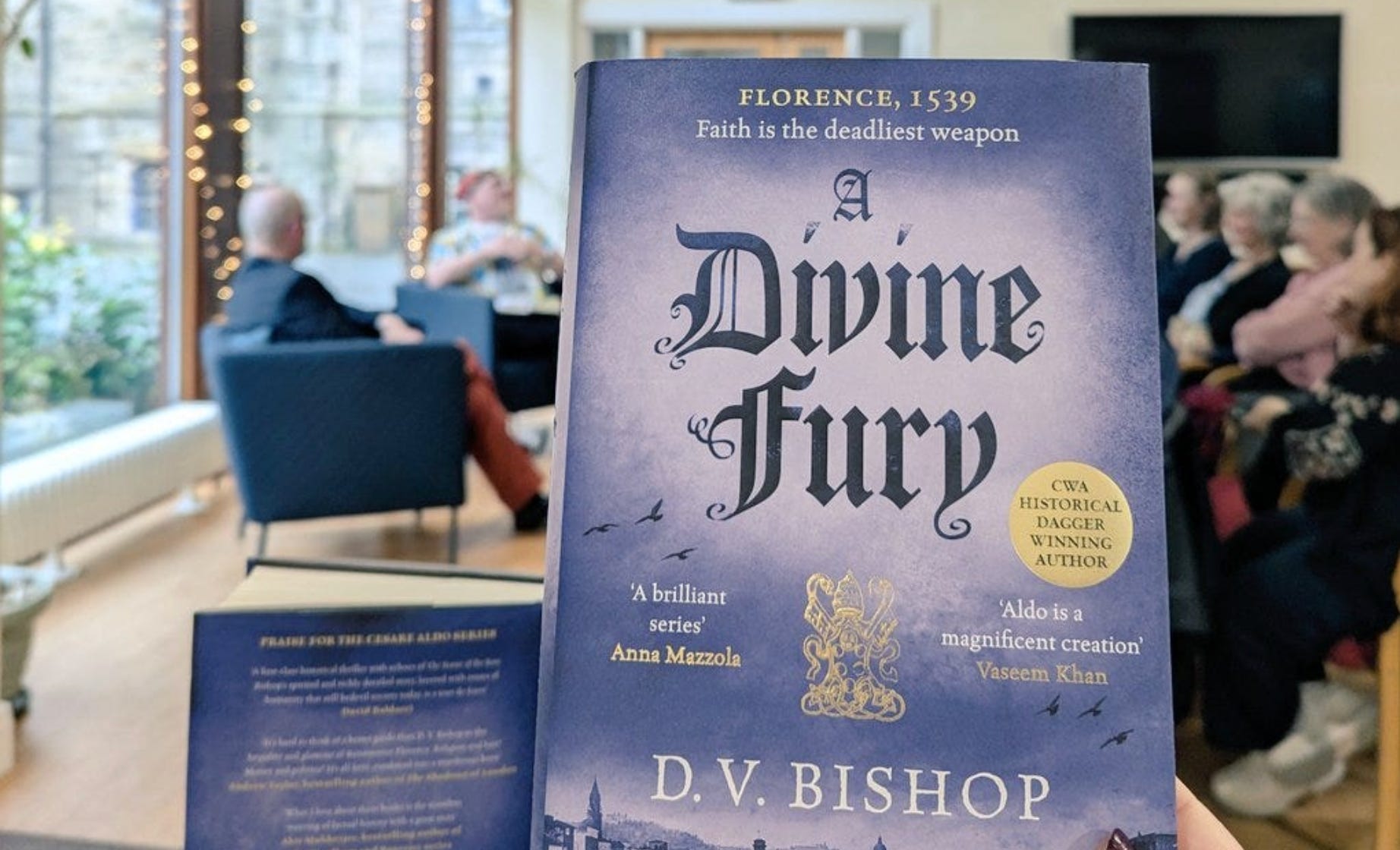
The launch for A Divine Fury, wonderfully hosted by The Edinburgh Bookshop
In these situations, the writer becomes an author who is expected to answer questions about their work, their methods, their inspirations and their motivations. That’s fair enough and can be enjoyable if you’re a screaming extrovert like me; for the shyer, introverted writers, it may be excruciating and utterly nerve-wracking.
But what about their partners, spouses and families? Are those people also obliged to be part of the promotional efforts for a book? I suggest that’s something each writer should consider: how much of your life beyond the book are you happy to share, and what parts of your world would you rather keep private? Where is the dividing line?
Traditional publishers have become better at helping new writers prepare for their journey to becoming an author, but the thorny topic of how much to reveal of a life deserves more care and consideration than it may be getting now. Ultimately, I’m with Kristen Zimmer on this: it’s the writing which matters most. End of story.
Progress report
I’m writing early this because of imminent time scrunches but am hopeful of hitting 55,000 words by Tuesday 9th June. I’ll report back next week… Onwards!
If you’ve been forwarded this newsletter by a friend, feel free to subscribe. But if you no longer wish to receive it, click unsubscribe at the bottom of the page.
Lots to think about here, especially as my current WIP centres on a gay man coming home after many years away. And I am definitely not a gay man (surprise!)
All the SM advice I’ve seen recommends telling people just a little about yourself, sticking to safe subjects like pics of your writing space, thoughts about your writing process, pets. All I can say is thank god I have a cat.