
Nailing the dismount
What a great ending needs most

Welcome to the free newsletter of David (D. V.) Bishop, author of the Cesare Aldo historical thrillers set in Renaissance Italy. This time: getting the finish right…
The ending is nigh(ish)
After submitting my PhD on June 19th, I found myself with a few days off teaching and the final 20,000 words of my work in progress novel waiting to be written. But before I could do that, I had to review and revise the previous 20,000 words, making notes on what characters knew and therefore what they’d be motivated to do next.
Then came the ultimate challenge: plotting a satisfying end. Sometimes that is quite easy, particularly if you’ve had an ending in mind for a while (my third Aldo novel Ritual of Fire was like that). But my work in progress (WIP) has an unusual structure and a tricksy narrative position (you’ll see what I mean in 2027).
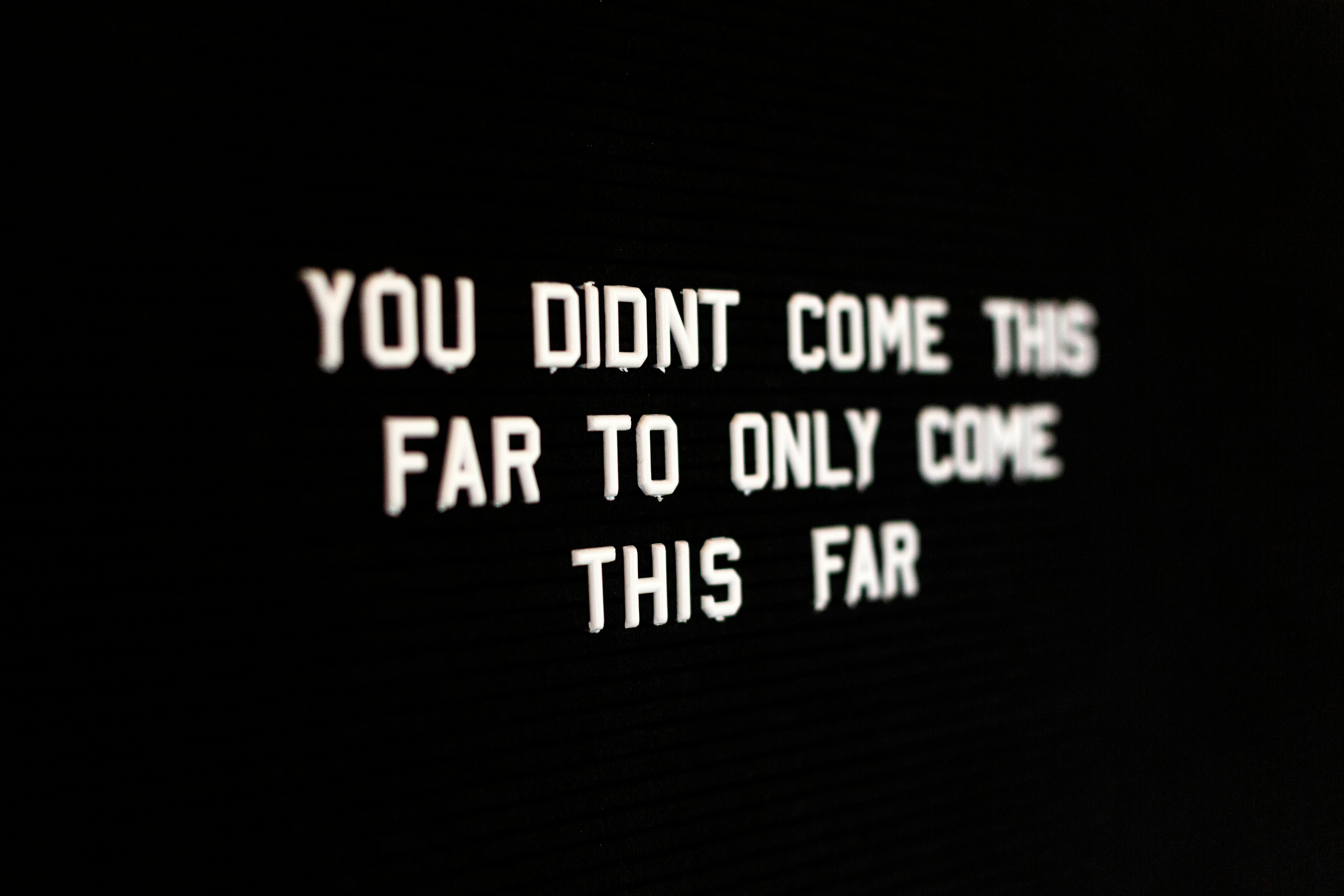
It’s a sign • Photo by Drew Beamer on Unsplash
So I spent much of Monday June 22nd beating my head against a metaphorical wall, trying to figure out how to finesse all the narrative threads in a way which would be both enthralling and emotionally satisfying. Ideally, a finish with at least one surprising reversal and plenty of juicy character moments in the closing chapters.
For those who haven’t been reading the progress reports at the bottom of past newsletters, my 2027 novel is not a Cesare Aldo book. It is still a historical thriller set in Renaissance Italy, but Aldo does not feature in this narrative. He gets one or two oblique references, but his actual name goes unmentioned on the page.
Eventually I devised a rough pathway to the finish, but only by plotting out what had actually happened earlier in the story, instead of what seemed to be happening. Now I’m writing my way toward that finish to see if it works (wish me luck!). But all of this got me thinking about the challenge of crafting a compelling ending.
Let’s get indulgent
A great ending needs to achieve all sorts of things. Most novels establish a dramatic question in their opening chapters. Will the protagonist find love or ask for help? Will they discover who killed a particular victim? Will they attain a specific objective, or shall the forces of antagonism defeat them, derail that quest?

Can the forces of antagonism be beaten? • Photo by Guillaume de Germain on Unsplash
A dramatic question creates an expectation for readers that it will be answered by the final chapters. This answer may not be what the obvious solution, or it may come at a great cost for the protagonist. The solution may involve tragedy or heroism, hilarity or hope. It might be as simple as someone admitting they need help.
It is a legitimate choice to subvert reader expectations. But if that’s the case, I’d suggest this needs to be signalled in the opening chapters. If not, readers can feel they were mis-sold by what the story promised. Don’t promise a Happy Ever After and then kill both romantic leads if you’re craving positive reader reviews.
A writer friend calls what writer and reader wants as indulgences. Readers love a particular kind of story because it indulges them, providing many of the things they enjoy in this kind of narrative. But writers also have their indulgences, things they want to do in their stories. Some may satisfy reader indulgences, some may not.
Think of it as a Venn diagram. How much the indulgences of writers and readers overlap can influence the success of a particular narrative (there are many other factors in success, of course, including publication strategy, marketing budget, bookseller engagement and enthusiasm, fortuitous timing and good old luck).
Can’t get no (emotional) satisfaction
I think another part of a successful ending is tone (I discussed tone in a previous newsletter). It needs to be a great fit for the story you’re telling and align to the promise presented in the opening chapters. The start of a novel makes a contract with readers, saying ‘I’ll be this kind of novel’. Your ending needs to fulfil its promise.
Tone is huge factor in this. If the opening chapters are very funny, this creates an expectation the laughs will continue and everything will turn out okay. If the narrator is full of attitude and readers enjoy this, they’ll want it to continue. It’s worth asking the question, what do you want readers to take away from the ending?
For me, the goal is an emotionally satisfying ending. Yes, I’ll tie up most of the plot threads but often not all of them, especially if the book is part of a series as this leaves me with as a story springboard for the next one. (My WIP is a standalone, so I’m doing my best to answer all the big questions posed within in.)
But plot and emotional satisfaction are two different things. Emotional satisfaction is having your reader close the book and say yes, of course: it had to end that way. The final chapter can still be completely surprising – it certainly shouldn’t be predictable - yet should also possess a pleasing inevitability.
There is no need to tie up all the plot threads with individual bows, but readers enjoy having their emotional needs met. One of the reasons we love stories is because they achieve a level of satisfaction that real life rarely provides. That’s why I’m striving to do with my WIP; the proof of the pudding will be served in 2027.
Progress report
I’m writing this on Sunday 28th with 68,000 words of my WIP drafted. I’ve got the next three days off teaching and am hoping to hit at least 71,000 before flying to That Fancy London to present a trophy at the 2026 Crime Writers’ Association Dagger Awards on Thursday (alas, I’m not shortlisted this year). Onwards!
If you’ve been forwarded this newsletter by a friend, feel free to subscribe. But if you no longer wish to receive it, click unsubscribe at the bottom of the page.
Ooh, I will hopefully see you there on Thursday!
The emotional satisfaction aspect is so important. Not at the expense of wrapping up plot, as you say, but if you can set expectations early and maintain them throughout the book, then deliver that emotional satisfaction at the end in addition to plot, readers will thank you for it.