
Historical howlers
When best-laid plans go awry

Welcome to the free newsletter of David (D. V.) Bishop, author of the Cesare Aldo historical thrillers set in Renaissance Italy. This time: that was my mistake…
Nobody’s perfect
Authors often regale audiences at book events with tall tales about errors pointed out to them by eagle-eyed readers. These communications almost always open with a paragraph of praise about that particular book before a version of the following phrase ends up getting deployed: “However, I think you will that…”
The correspondent then points to a detail the author has got wrong. It might be a tiny thing, a minor moment in a much larger narrative. But if you do have a particular expertise or specific knowledge of that tiny thing, seeing it be wrong on the page throws you out of the story, ending any suspension of disbelief at once.
Writers of historical fiction are perhaps particularly likely to receive such emails because there is always – always! – someone more knowledgeable than the author about aspects of a time or place in the past. More than once I’ve received such emails and my heart often used to sink when they pinged into my inbox.
I’ll give you some of the howlers I have perpetrated in my Cesare Aldo novels. The first, City of Vengeance, has Strocchi visit a church in Florence. An older woman praying at a pew proves helpful, and Strocchi leaves the church better informed. The problem? Florentine churches didn’t have pews in 1536, which is when the book’s set.
Later in the same novel Aldo and Strocchi have a tomato-based stew while visiting Bologna. The problem? The tomato had reached the Italian peninsula by 1536, but it wasn’t a key part of food there as it is today. In fact, some people believed the tomato was poisonous. Others had a tomato on their dinner table as a conversation piece.
The shame, the shame
The most glaring such error was in the third Aldo novel, Ritual of Fire. The first published edition makes many references to the notorious monk Savonarola who essentially led Florence in 1497, such was the power of his fiery sermons. Half the city crowded into the main cathedral to hear Savonarola preach on Sundays.
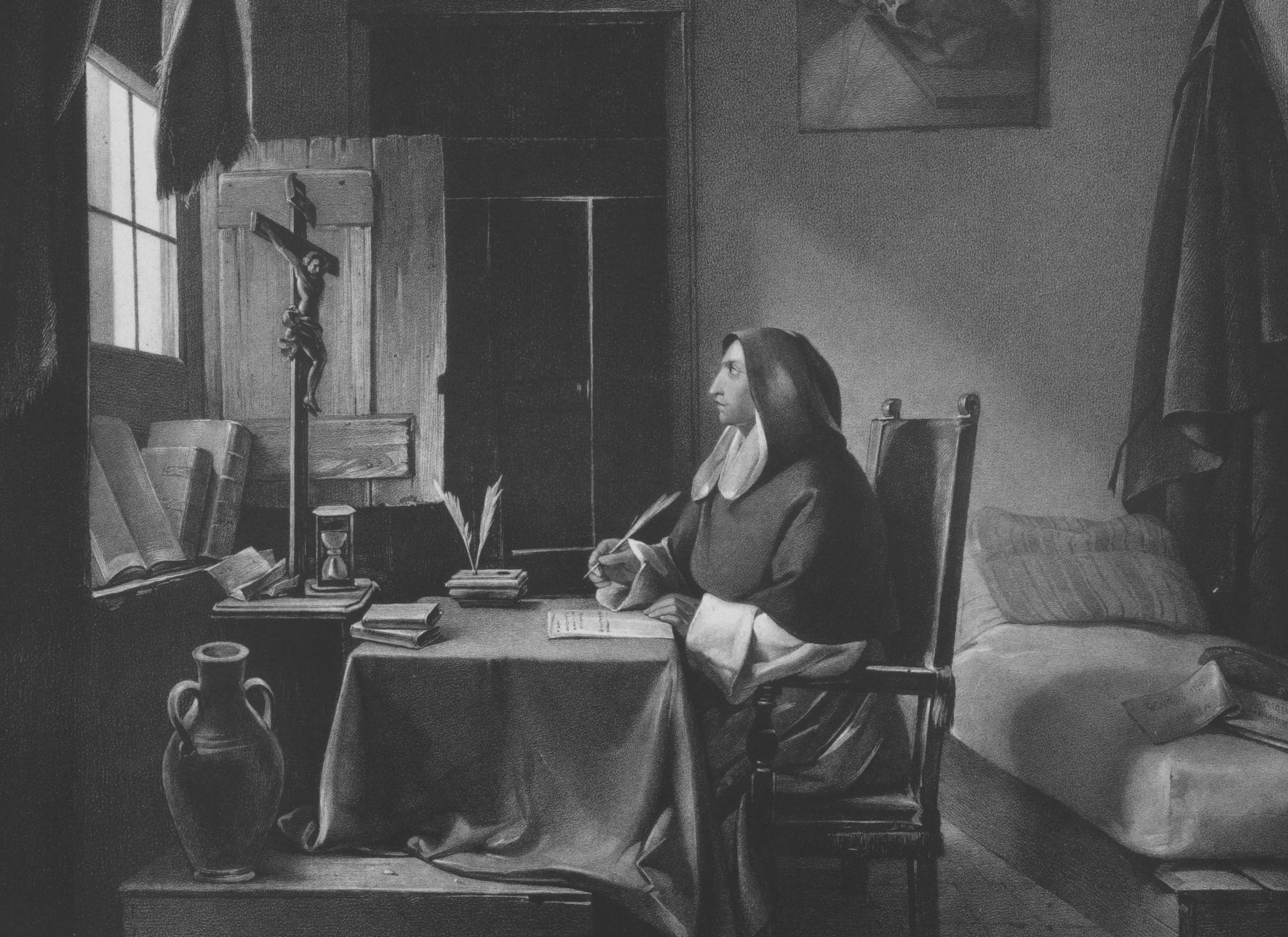
A depiction of Girolamo Savonarola • Photo by The New York Public Library on Unsplash
So far, so accurate. Unfortunately, I wrote that he was a Franciscan monk, when he was actually a Dominican monk. This mistake got past me and everyone at publisher Pan Macmillan before being pointed out about five micro-seconds after the first hardback reached the hands of a reader in the summer of 2023. Ouch.
It was corrected for the paperback, but I have received several emails about that particular howler. One of them came from a priest, Father Dennis O’Neill. Having reassured him it would be fixed in the paperback, a sudden brainwave hit me. My next Aldo novel featured exorcisms and other matters involving faith and priests.
Would Father Dennis be willing to read an early draft of what became A Divine Fury and point out any regrettable errors in the text? He kindly agreed, so I sent him a PDF and went downstairs to make a cup of tea. While the water was still boiling, I suddenly recalled what the priests actually do in the pages of that particular novel.
I rushed back upstairs and sent a second email, forewarning him the priests in my novel were very… flawed. Father Dennis wrote back a few minutes later, saying everyone is flawed and this didn’t worry him. He did read the draft and helped me avoid a fresh mistake, earning a thank you on its Acknowledgments page.
Helpful people of knowledge
I’ve made a habit to seek out people with knowledge and expertise that might head off some of my more egregious historical mishaps. Professor Tamar Hodos has been a great help on lives of faith, so much so she makes a cameo appearance in A Divine Fury as a neighbour of Doctor Saul Orvieto, which was fun to include.
(I rarely get to include such cameos in my Aldo novels as most people don’t have names which are credible for books set in late Renaissance Italy. Happily, fellow author Alessandra Ranelli does have an era-appropriate name and thus makes a fleeting appearance in my 2027 novel as a comely young widow of 1540 Florence.)

Learn from failure is my policy • Photo by Brett Jordan on Unsplash
Professor Elisheva Baumgarten of the Hebrew University of Jerusalem was a great help with particulars of the Jewish experience in Renaissance Europe for Shadow of Madness. Another person has recently reached out to offer their assistance in this area, so I hope to keep improving my accuracy in the Aldo novels still to come.
Guns are an area where I can claim very little knowledge whatsoever, so I’m indebted to Dr Catherine Fletcher - a professor at Manchester Metropolitan University - for her help. I heartily recommend her latest book, The Firearms Revolution, and City of Vengeance owes much to an earlier volume by her, The Black Prince of Florence.
If you or someone you know has specific expertise about an aspect of life in Renaissance Italy, do feel free to get in touch via the comments below this newsletter. I might be bringing Aldo to 1540s Scotland in a future novel, so experts in Scottish history of that era would be a very help addition to my network. Onwards!
If you’ve been forwarded this newsletter by a friend, feel free to subscribe. But if you no longer wish to receive it, click unsubscribe at the bottom of the page.
I once had a reader who told me that my protagonist had got on the wrong platform for his destination on Glasgow's Subway. So, one day, book in hand, I traced the route I'd written about. Walked into Buchanan Street station, down the stairs and onto the platform in question, and yes, they were right, I'd put the hero on the platform that would have taken them the long way around to where they were going. At least the reader was paying attention.
Thanks for sharing - I always find that sort of thing interesting. When I wrote LAND GIRLS we got letters complaining about the rust on a plane door (as of course it would have been fairly new if it wasn’t being made 70 years later!).
My favourite was a complaint about an actress wearing contact lenses. We had to point out that wasn’t actually part of the character.
My producer went on Points of View to defend one issue about church bells not ringing during war time.
However on the whole, such corrections are much appreciated and help the realism of the story. And as you say, there is always someone who knows more!