
Dark & stormy writing
Plus: competition to celebrate 500 subscribers

Welcome to the free newsletter of David (D. V.) Bishop, author of the Cesare Aldo historical thrillers set in Renaissance Italy. This time: there’s a storm coming…
Weather with you
One of the notorious cliches in writing is to open a story with the phrase ‘It was a dark and stormy night.’ There’s a running gag about this in the movie Throw Momma From the Train with author Billy Crystal being blocked on whether the weather should be hot or wet. It’s Momma who provides the perfect opening: ‘The night was sultry.’
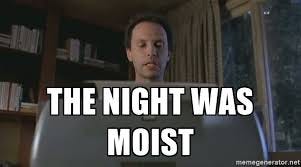
Billy Crystal struggles with writer’s block in Throw Momma From the Train
The late, great crime writer Elmore Leonard once proposed ten rules for good writing. I agree with many of them, especially #10 (Try to leave out the parts that readers tend to skip). But what is his first rule of good writing? Never open a book with weather. Why? Because, as mentioned above, it is such a dreadful cliché.
That said, I do believe weather can serve a useful purpose within a story, if deployed well. Since the weather this week is suddenly summery (I live in Scotland and only set aside the Big Coat last Thursday), it seems like a good time to discuss some of the opportunities and challenges that arise while writing weather into a novel.
I teach postgraduate creative writing and sometimes find myself asking at what time of year is a student’s story taking place? Specifically, what is the weather like in their story’s setting? Climate and seasons can make a big difference to how characters move through a narrative, creating opportunities for deeper reader immersion.
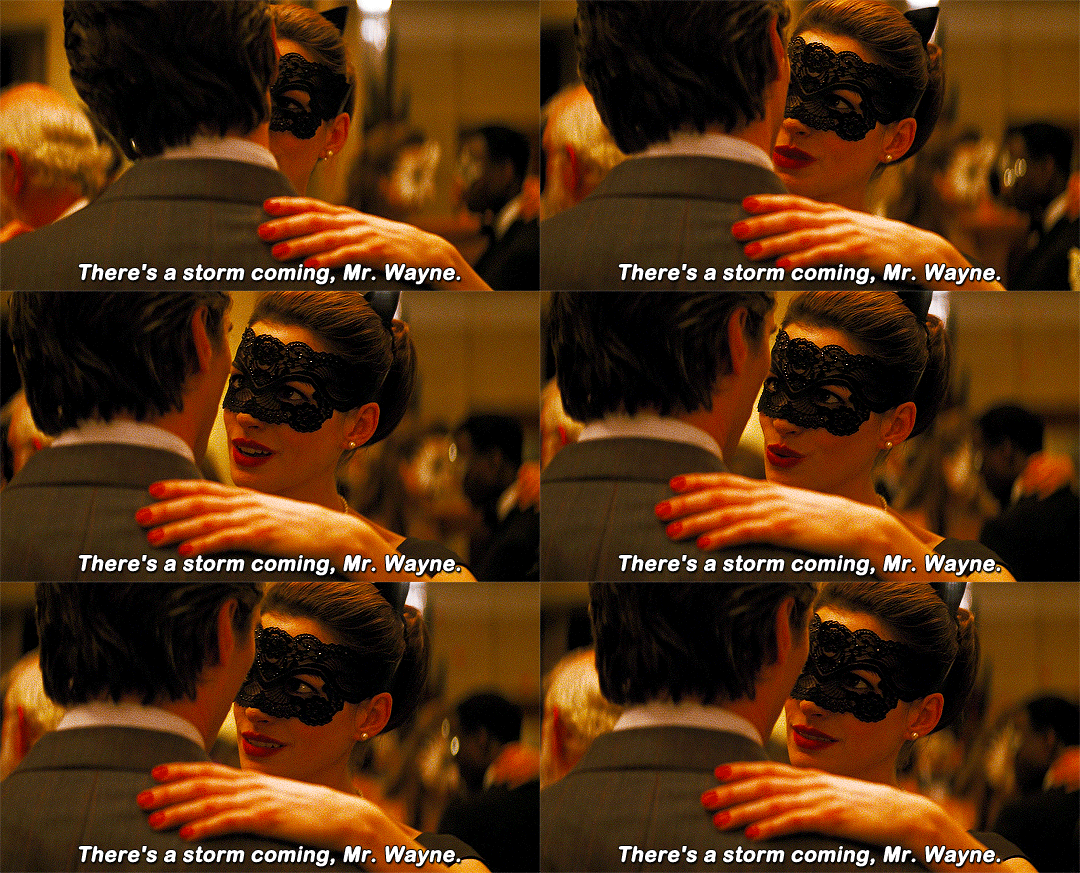
Anne Hathaway as Selina Kyle offering a weather forecast in The Dark Knight Rises
Autumn and winter are great backdrops for moody, Gothic tales while summer is a strong fit for pacey, high-octane thrillers. Spring seems like a suitable setting for stories about new lives and new loves, the optimism of a new beginning matching the weather. Aligning the season with a story’s mood can help deepen that on the page.
Weather with Aldo
I always pay close attention to weather when writing my Aldo novels. The first four books in the series each took place in a different season. City of Vengeance is set during the dead of winter, with lots of slippery ice underfoot and even some snow. The Darkest Sin takes place during spring, suffused by scents of early blooming flowers.
Ritual of Fire leans into a heatwave and the threat of drought, with the scorching weather driving everyone close to madness and helping fuel a wave of religious fervour. A Divine Fury is an autumnal novel, full of rain and cold winds making things miserable for the characters to reflect the tough time they are having.
Not sure what film this is from, but Michael Shannon does intense very well…
Carnival of Lies is spring again, while the forthcoming Shadow of Madness embraces the worst of winter in the Tuscan hills north of Florence, with snow becoming a blizzard. That traps Aldo and his companion Doctor Saul Orvieto inside an isolated institution for the criminally insane run by monks and nuns (and then the killings start!)
I’m working on next year’s book at the moment. It is still set in Renaissance Italy, but – unusually for my historical thrillers – this narrative happens in the summer of 1540. That’s between the fifth and sixth Aldo novels, the first time I’ve written a book that breaks the strict chronological sequence of the series.
Naturally, the summer setting means heat and plenty of it. Writing that has become a lot easier now the weather outside is much warmer (as I type this parts of the UK are sweltering in the hottest ever recorded day during the month of May). By comparison, writing a sweltering summer book during a frozen February was more of a challenge.
It’s not always easy to align the novel you’re drafting with the weather outside. I know authors who draft Christmas tales in the middle of summer. While writing Ritual of Fire during a cold, cold winter I used to play a sound effects track of a campfire in the background to evoke the hot summer night feeling the book needed to have.
Get the balance right
The challenge with all of this is getting the balance right. Yes, by all means build the weather as a factor in your narrative. It can affect the mood of characters, change the time it takes them to achieve a task (wading through mud or snow is a lot slower than crossing a dry river bed at the height of summer, for example).
You can also weave weather and the seasons into your thematic architecture (making word choices to hint at subtextual elements in a narrative). Ritual of Fire is my most overt example of this, with lots of references to sparks, heat, and blazing. But try to avoid common cliches, such as characters saying ‘A storm is coming’…
No prizes for guessing what this line from The Terminator movie means…
This is where an editor or outside feedback can be helpful, so long as you don’t expect different readers to reach the same conclusions or have the same response to the same text. I gave the first draft for City of Vengeance to a manuscript consultant who advised me to pare back the references to winter., they were too heavy-handed.
But when Pan Macmillan acquired the novel for publication, one of the first things my new editor asked me for was more references to winter in the book! So I spent a day carefully reinstating a lot of the moments when ice and coldness were originally mentioned in the text, many of which I’d removed. Remember, feedback will vary…
I so believe deft use of weather and seasons in a novel can help ground a reader in the reality of its setting, making that world more credible and recognizable. Books which omit weather often feel a bit untethered, as if things are taking place in a temperature-controlled environment. Fine for a spaceship, less convincing in Renaissance Italy!
Competition: 500 subscribers
Last week this newsletter hit a wee milestone with five hundred of you signed up to receive my weekly witterings about writing. First of all, grazie mille to you for being part of this newsletter. I planned to have monthly updates at most, but found myself enjoying the experience too much so it soon went to fortnightly, and then weekly.
I want to celebrate hitting 500 subscribers with a wee competition. The first ten people who put the correct answer to a particular question in the comments section of this week’s newsletter by 11.59pm UK time on Sunday May 31st 2026 will get their name mentioned in the Acknowledgements section of my 2027 novel.
What’s the question, you ask? In August this year one of my Cesare Aldo novels is going to appear in a new language. Rather than use a literal translation of the original title, the publishers have devised a title of their own. I’m going to tell you what that new title is when translated back into English: The Devil Wandering in Firenze.

Tim Curry plays a demon in the film Legend, can you think of better casting?
Your challenge is to guess which of the five Cesare Aldo novels published to date best fit that new title. Put your answer in the comments section of this newsletter before Monday 1st June 2026 and your name could appear in a D. V. Bishop novel next year. Only one entry per person please to give everyone a chance!
Progress report
I’ve reached 46,000 words on my work in progress, and have agreed July 20th as the delivery date for this novel with my editor. I hope to hit 50k by this time next week, but I’m juggling that with my PhD with a delivery deadline of late June. Onwards!
If you’ve been forwarded this newsletter by a friend, feel free to subscribe. But if you no longer wish to receive it, click unsubscribe at the bottom of the page.
I'm very torn between Ritual of Fire (because of devil and fire, obviously) and Divine Fury but will settle on Divine Fury.😀
I'm going to guess Ritual of Fire.